Tennessee Waste Rules, Explained for Columbia Projects
Tennessee and Maury County waste rules shape every project in Columbia. Here's what actually matters on a job site.
In this guide
- The rules that shape a project
- Construction debris and the transfer station
- Burning is restricted
- Load separation and Class IV
- How a hauler keeps you clear
If you're running a project in Columbia, a handful of Tennessee and Maury County rules decide where your debris goes and how it has to travel. Knowing them keeps a job cheap, clean and legal.
The rules that shape a project
Tennessee waste is regulated by TDEC - the Division of Solid Waste Management for landfills and the Division of Air Pollution Control for burning - with the Tennessee Division of Forestry running the seasonal burn-permit system. Locally, Maury County runs the convenience centers and the transfer station. Together those set how a Columbia project has to handle its debris.
Construction debris and the transfer station
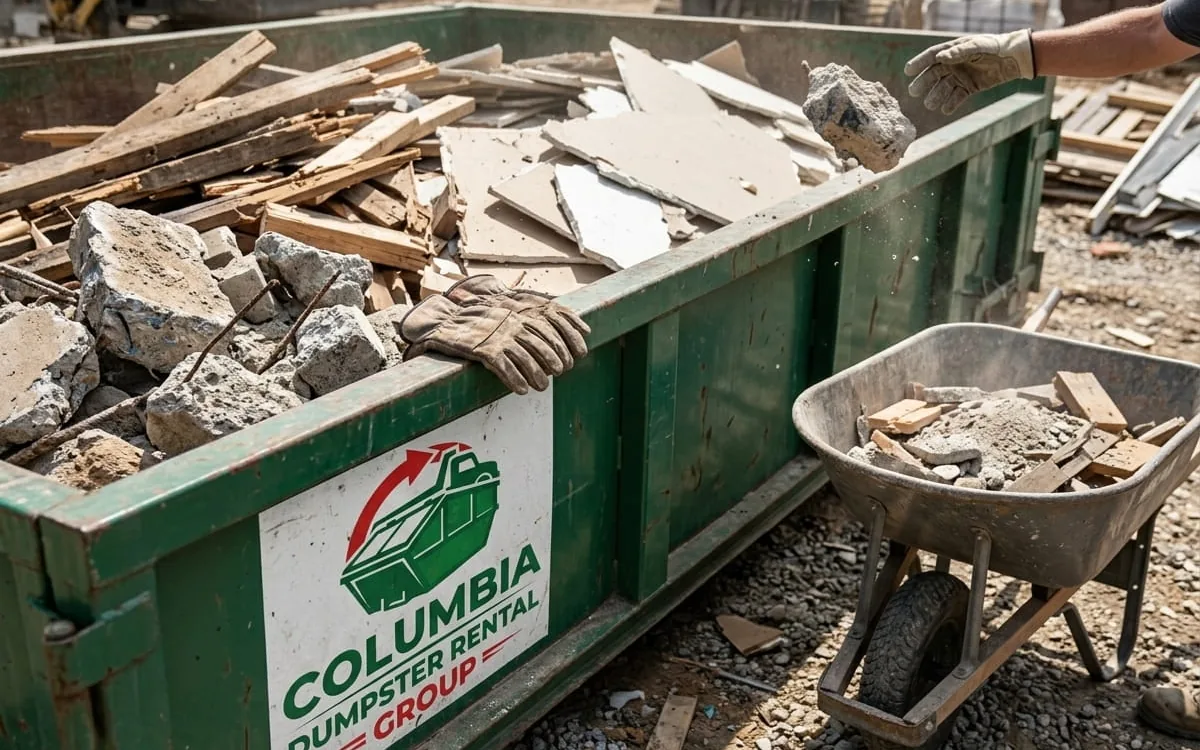
The first rule is the big one: construction and commercial debris cannot go to the county convenience centers, which are residential-only and capped at a couple of cubic yards a day. It has to go to the Maury County Solid Waste transfer station on Lawson White Drive, or a permitted Class IV landfill - the Tennessee class that takes construction and demolition waste. So a roll-off isn't optional convenience on a Columbia job - it's how you get the debris to the right place.
Burning is restricted
The second rule is one rural properties feel most: burning is tightly controlled. Under TDEC rules, open burning of construction, demolition and household debris is prohibited outright, and burning brush needs a Tennessee Division of Forestry permit during the October 15 to May 15 fire season - with fines for burning banned material reaching into the thousands. A container is the legal alternative that doesn't depend on a permit or the weather.
Load separation and Class IV
Maury County runs a load-separation policy at the transfer station - loads must be separated before they reach the ticket window. That means a sorted load moves through faster and cheaper: clean scrap metal comes off free, clean concrete can be recycled or reused as fill, and brush is kept separate. Keeping streams sorted is both required and cheaper.
How a hauler keeps you clear
This is where a local hauler earns its keep. We're an approved commercial customer at the transfer station, we know the load-separation policy, which items route elsewhere, the covered-load requirement, and where tires, appliances, electronics and brush go, and we keep the debris off the convenience-center path and out of a burn pile so none of it becomes your problem. With the right local hauler, staying compliant isn't something you have to think about.
Book a container in Columbia
One flat rate covering delivery, seven days, pickup and disposal.
(931) 416-3661Questions readers ask about this
Can construction debris go to a Maury County convenience center?
No - the convenience centers are residential-only and capped at a couple of cubic yards a day. Construction debris goes to the Maury County transfer station or a permitted Class IV landfill.
Can I burn brush and debris in Columbia?
Construction and demolition debris can't be burned at all under TDEC rules, and burning brush needs a Tennessee Division of Forestry permit in the Oct 15-May 15 fire season. A container is the simpler, legal alternative.
Who regulates waste in Tennessee?
TDEC - the Division of Solid Waste Management and the Division of Air Pollution Control - with the Division of Forestry running burn permits. Locally, Maury County runs the transfer station and convenience centers.
What is the load-separation policy?
Maury County requires loads to be separated before the ticket window at the transfer station, so clean metal comes off free and clean concrete can be recycled. A local hauler handles the separating for you.