Where Construction Debris Goes in Columbia - and Why You Can't Burn It
The single most useful thing to understand about clearing a project in Columbia is that construction debris can't go to the county convenience centers - and Tennessee prohibits burning it, so that's not an option either.
In this guide
- The rule that catches people out
- Convenience centers won't take it
- Tennessee restricts burning
- Where the debris actually goes
- How a roll-off solves it
If you're planning a remodel, a roof tear-off or a new build in Columbia, there's a local reality worth understanding before you start, because it decides how your debris has to leave the property - and burning it, the old rural solution, is heavily restricted under Tennessee law.
The rule that catches people out
In Maury County, the nine convenience centers are there for residents' household waste - and they're capped at two to three cubic yards a day. Commercial and construction debris cannot go to a convenience center at all. It has to go to the Maury County Solid Waste transfer station.
That surprises people, because household garbage does get handled. But a contractor's debris - drywall, framing, flooring, shingles, old fixtures - is a different category, and it goes to the transfer station on Lawson White Drive, not the neighborhood convenience center.
Convenience centers won't take it
The county is explicit: convenience centers are residential-only, capped at a couple of cubic yards a day, and construction and commercial debris must go to the transfer station instead. A real project's volume dwarfs what a convenience center handles anyway, so that debris needs its own container.
Tennessee restricts burning
In the country the old answer was to burn it. In Tennessee that's tightly controlled: under TDEC rules, open burning of construction, demolition and household debris is prohibited outright, and even burning brush needs a Tennessee Division of Forestry permit during the October 15 to May 15 fire season - with fines reaching into the thousands for burning banned material. So burning your renovation debris isn't a shortcut, it's a violation. A roll-off is the reliable, legal alternative.
Where the debris actually goes
Here's the good news for Columbia: the disposal is genuinely local. The Maury County Solid Waste transfer station sits right here in town on Lawson White Drive - a state-permitted facility. So a real project's debris goes a short distance under a covered, separated load, which keeps the haul quick and the cost sensible. The county runs a load-separation policy, so a sorted load moves through faster; clean metal comes off free; electronics go to a recycler; and brush is kept separate.
How a roll-off solves it
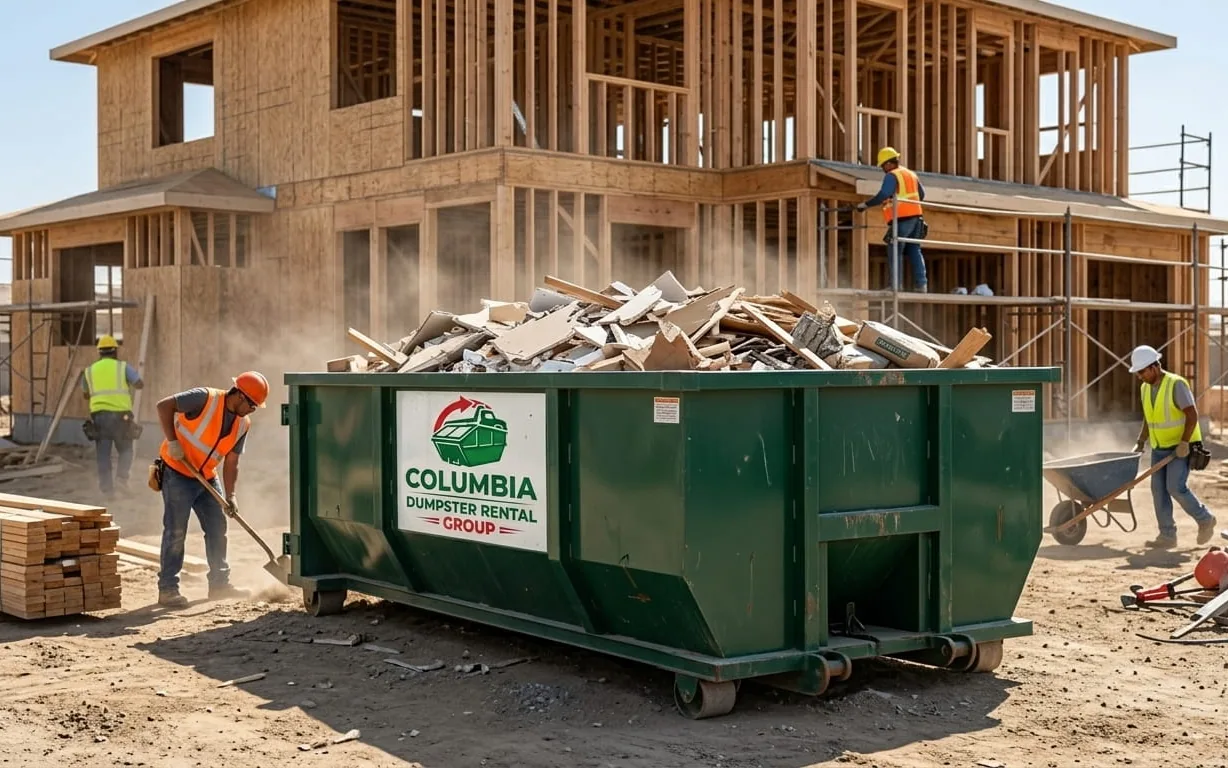
A roll-off dumpster is simply the bridge between your project and the transfer station. We drop an open-top container on your driveway (placed to meet the city's rules), you fill it at your own pace, and we haul it - covered and compliant. One flat price covers delivery, the rental, collection and disposal, and the whole responsibility for the debris comes off your plate. Tell us what the job is and we'll size it and quote it flat.
Book a container in Columbia
One flat rate covering delivery, seven days, pickup and disposal.
(931) 416-3661Questions readers ask about this
Can I take construction debris to a Maury County convenience center?
No - convenience centers are residential-only and capped at two to three cubic yards a day. Construction and commercial debris has to go to the Maury County transfer station, and a roll-off is how you get it there.
Can I burn my renovation debris?
No - Tennessee prohibits burning construction, demolition and household debris, and even brush burning needs a Division of Forestry permit in the Oct 15-May 15 fire season. A container is the reliable, legal answer.
Where does the debris go?
To the Maury County Solid Waste transfer station on Lawson White Drive - a short, local haul, covered as Tennessee requires - or a permitted Class IV landfill.
What about electronics and brush?
Electronics go to a recycler and brush is kept separate; the transfer station runs a load-separation policy. We route each stream to the right place.