
Columbia's Growth: Handling New-Construction and Remodel Debris
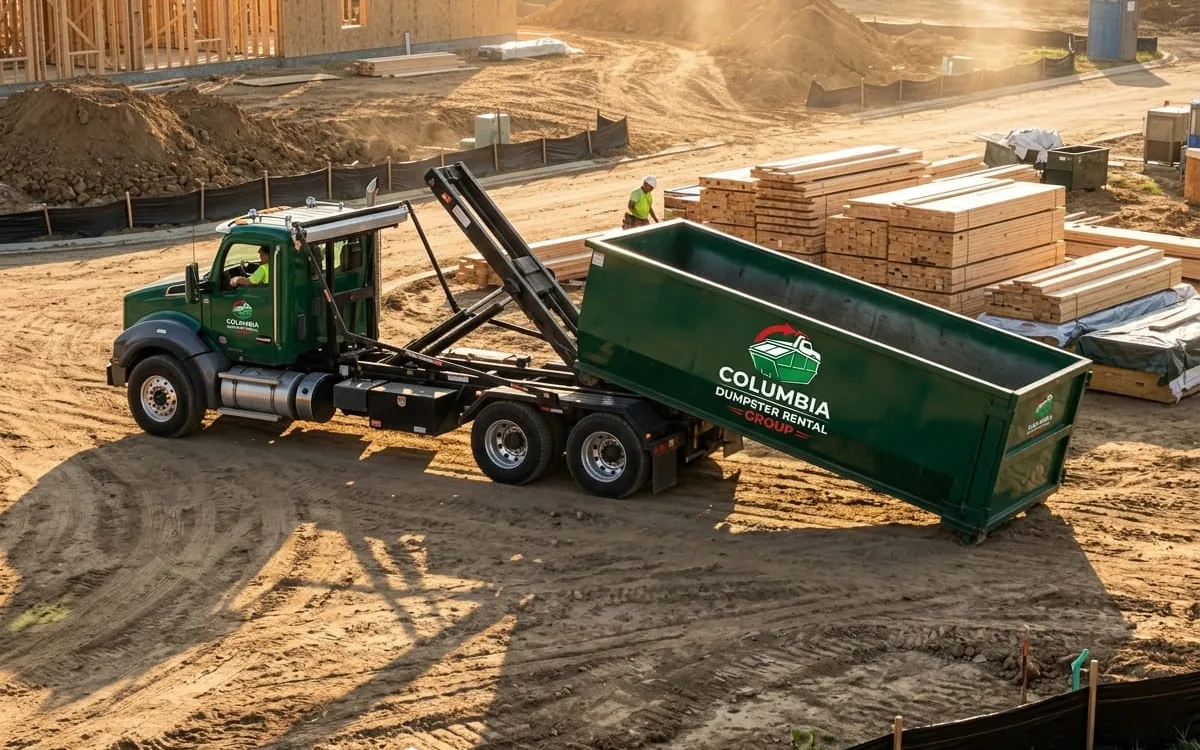
Columbia and Spring Hill anchor one of the fastest-growing corners of the Nashville metro, so much of the work here is new construction and remodels - and that debris behaves differently from a simple cleanout.
In this guide
- A booming Middle Tennessee county
- New builds vs older-home remodels
- Bulky debris vs dense debris
- Where the material goes
- Sizing a growth-driven job
Columbia isn't standing still. With the GM plant up at Spring Hill and the pull of the Nashville metro, Maury County is one of the fastest-growing areas in Tennessee, and that shapes the waste work: a steady stream of new builds, additions and remodels, each producing debris that has to be hauled and disposed of properly.
A booming Middle Tennessee county
The growth is real and constant. New subdivisions spread north toward Spring Hill and Thompson's Station, commercial construction follows the rooftops, and established Columbia neighborhoods see remodel after remodel. All of it is debris - and none of it can go to a residential convenience center.
New builds vs older-home remodels
New construction and additions produce bulky, light debris: offcut lumber, packaging, drywall scrap, siding. A gut renovation of one of Columbia's older or antebellum-era homes gives up denser material: old framing, layered flooring, plaster and tile. The two behave very differently in a container.
Bulky debris vs dense debris
Here's why it matters for your container. New-build debris is bulky but light, so it fills a 30 or 40 yard on volume - the large containers are usually right. Old-home debris is dense, so it reaches the weight limit while the box still looks half full - a smaller container filled properly is usually cheaper. Matching the container to which kind of job you're running is most of the sizing decision.
Where the material goes
Either way, the debris goes to the Maury County transfer station right here in Columbia - a short haul - since the convenience centers won't take construction debris and Tennessee restricts burning it. Clean concrete and brick can be recycled or reused as fill, clean metal comes off free, and a build turns up things that route elsewhere: appliances need refrigerant recovered, electronics go to a recycler, and any paint or chemicals are household hazardous waste.
Sizing a growth-driven job
For a new build or a big addition, a 30 or 40 yard for the bulky offcuts. For a single-room remodel in an older home, a 15 yard filled to weight. For a whole-home update, a 30 for the bulky contents, often with a separate 10 yard for the heavy plaster, tile and masonry. Tell us whether it's a new build or an older-home job and we'll size it.
Book a container in Columbia
One flat rate covering delivery, seven days, pickup and disposal.
(931) 416-3661Questions readers ask about this
Why does new-build debris need a bigger dumpster than remodel debris?
Because new-build offcuts and packaging are bulky but light, filling a 30 or 40 yard on volume, while old-home debris is dense and hits the weight limit in a smaller box. We match the container to the job.
Where does new-construction debris go?
To the Maury County transfer station in Columbia, a short haul, or a permitted Class IV landfill. It can't go to a convenience center, and Tennessee restricts burning it.
Do you run scheduled swaps for builders?
Yes. With the growth around Spring Hill and Thompson's Station, we run scheduled swaps for builders so the crews never wait on an empty box.
What size for a whole-home update?
Usually a 30 yard for the bulky contents, often with a separate 10 yard for heavy plaster, tile and masonry so neither load goes over weight.